Available, but broken
The CMS still shows Available, while sessions fail to start or deliver almost no energy.
Asset intelligence
A charger can show Available while no driver can charge. Iris R-One reads status, telemetry and session behaviour together to find Logged and Derived faults, and the cause behind them, across multi-OEM networks.
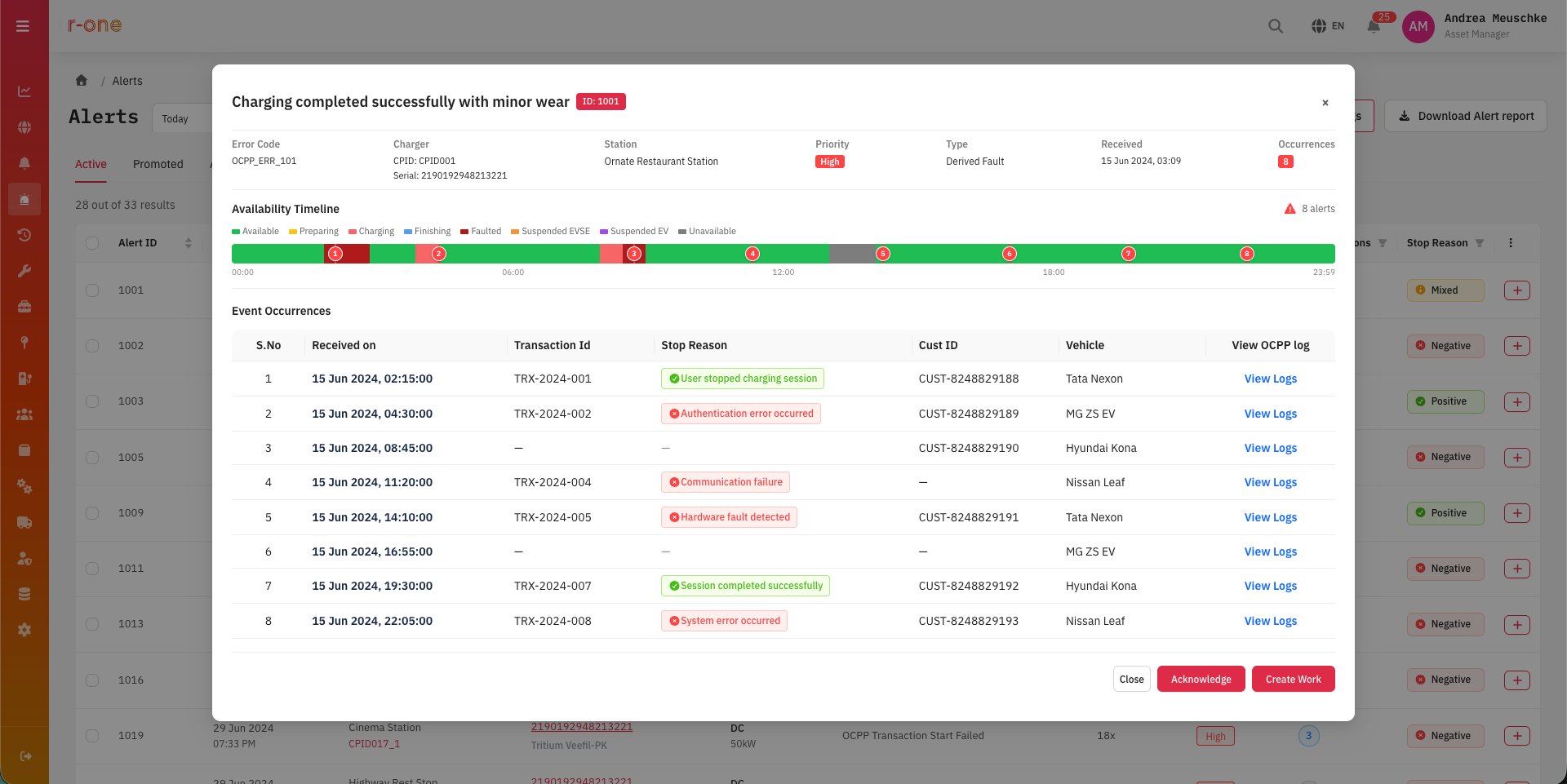
Drivers often find the fault before the operator does.
The CMS still shows Available, while sessions fail to start or deliver almost no energy.
Error codes vary by manufacturer, so the same failure looks different across the network.
Without root cause, a repaired charger fails the same way a week later.
Faults the charger logs and sends over OCPP.
e.g. Faulted, Unavailable, OEM error codeFaults R-One works out from status, telemetry and session behaviour when the charger logs nothing.
e.g. Shows Available but sessions never start, minimum-energy sessions, repeated interruptionsForward-looking risk from trends and history, with the prescribed fix attached.
e.g. Contactor degradation flagged up to 3 weeks aheadExplore predictive and prescriptive maintenanceA network raises more alerts than a crew can clear. R-One ranks them by business impact, so effort goes to the assets that protect the most revenue.
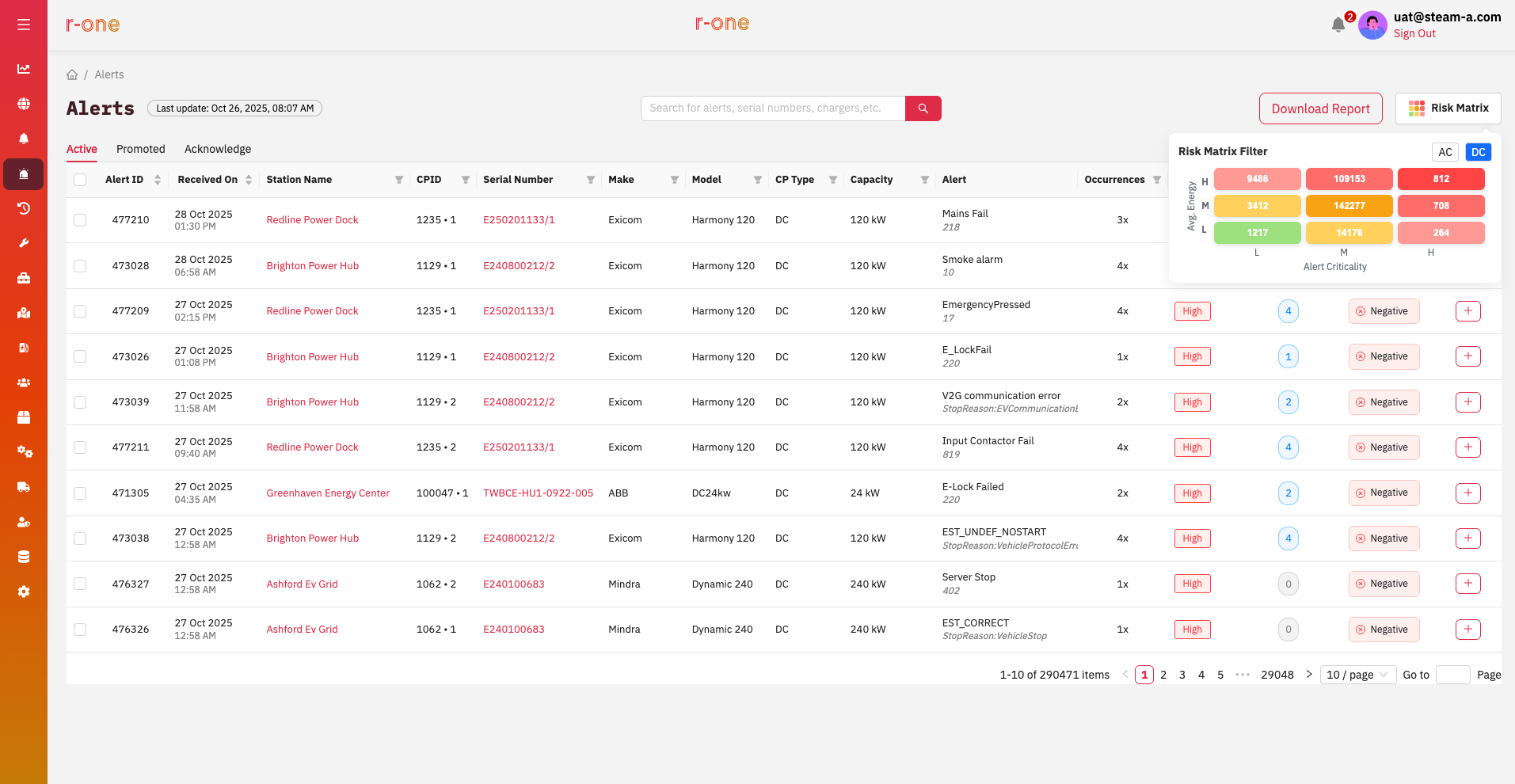
A risk matrix weighs alert criticality against the average energy a charger delivers. A serious fault on a busy charger ranks above the same fault on a quiet one, so ops starts where the loss is largest.
Vendor error codes mapped to common fault categories across 35+ manufacturers.
Non-starter sessions, minimum energy and minimum duration sessions, frequent offline or faulted states, and communication gaps.
Faults classified by cause, with repeat and batch defects surfaced across the network.
Downtime from status, heartbeat gaps and communication silence past a set threshold, per charger and connector.
Any fault becomes a reactive job with its context attached.
Status, telemetry, sessions and OCPP messages from every charger.
OEM error codes are mapped to common categories.
Logged faults are captured, and Derived faults are identified from behaviour.
Root cause and repeat patterns are identified for each fault.
Alerts are ranked by business impact, so the most valuable assets come first.
A work order or remote action is raised from the fault.
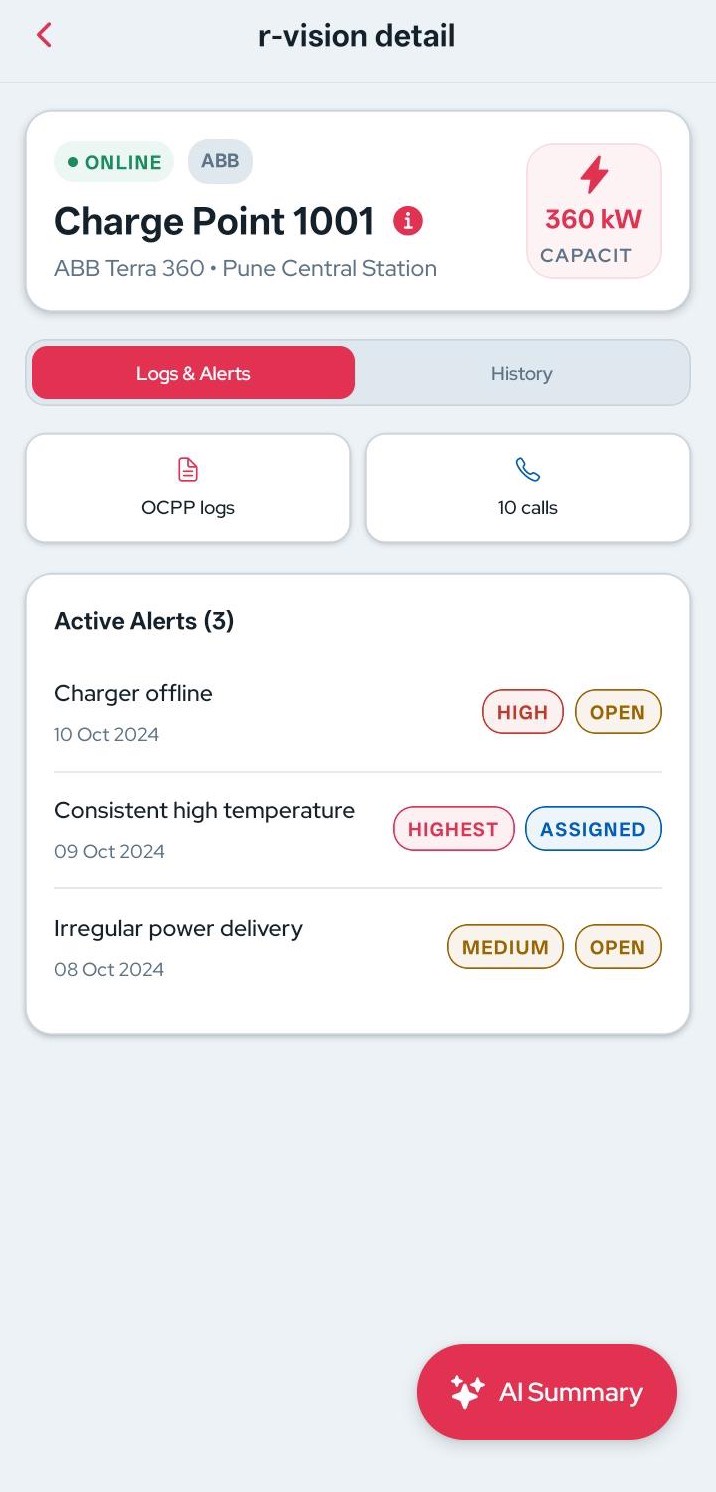
In the mobile app
Technicians see a charger's active alerts and OCPP logs in R-Vision, and findings and fixes recorded on site attach to the fault.
R-Vision is part of the mobile app. It gives the field team asset technical and operational data, plus remote actions to troubleshoot chargers.
Faults become reactive work in maintenance. Fault history feeds predictive and prescriptive maintenance.
Operators




A fault the charger never logs. R-One works it out from status, telemetry and session behaviour, for example a charger that reports Available while sessions never start or deliver almost no energy.
A fault the charger reports itself over OCPP, such as a Faulted or Unavailable status or an OEM error code.
By business impact. Each alert is placed on a risk matrix that weighs alert criticality against the average energy the charger delivers, so a serious fault on a busy charger is addressed before the same fault on a quiet one. Operations teams spend crew time where it protects the most revenue.
Yes. OEM-specific error codes are normalised into common fault categories, so faults compare across a multi-OEM network.
From Faulted, Unavailable and Offline states, plus heartbeat gaps and communication silence beyond a set threshold, per charger and connector.
R-One records true uptime per charger and connector and keeps an evidence trail for every fault and repair, ready for regulator and client reporting.
Share the size and make-up of the charging network, and the walkthrough will show what R-One surfaces on it. Demos run about 40 minutes.

